

If you’ve snaked the same drain three times this year, it’s time to look inside the pipe. A sewer camera inspection shows exactly what’s happening underground, so you fix the real cause instead of paying for another temporary unclog.
That matters more in Baltimore than in most cities. Much of the housing stock here, from Federal Hill rowhomes to Roland Park colonials, sits on sewer lines that are 60 to 100+ years old. Clay, cast iron and mature street trees are a combination that eventually leads to cracks, root intrusion and sagging pipe. A camera inspection is the fastest, least invasive way to find out where your line stands.
What Is a Sewer Camera Inspection?
A sewer camera inspection is a video survey of your main sewer line, done without digging. A plumber feeds a waterproof, high-resolution camera on a flexible cable into the line, usually through a cleanout, roof vent or toilet flange.
As the camera travels toward the city main, it streams live video to a monitor. Most systems also include a locator transmitter, so the technician can pinpoint the exact spot and depth of a problem from the surface.
A typical inspection takes 30 to 90 minutes. You get a clear answer to questions a drain snake can’t answer:
- Is the clog caused by grease and debris, or by roots growing through a joint?
- Is the pipe cracked, collapsed, offset or sagging (called a “belly”)?
- What is the pipe made of, and how much life does it have left?
- Exactly where is the damage, and how deep is it?
Many plumbers will also give you a recording of the footage, which is useful for comparing repair quotes or filing an insurance claim.
7 Signs It’s Time to Schedule an Inspection
If you notice any of these, a camera inspection should be your next call, not another bottle of drain cleaner.
- Recurring clogs. A drain that backs up again within weeks or months of being cleared usually points to a problem in the main line, such as roots, a belly or a partial collapse.
- Multiple slow drains at once. One slow sink is a local clog. A slow tub, toilet and floor drain at the same time means the main sewer line is restricted.
- Gurgling toilets or drains. Bubbling when you run water elsewhere in the house signals trapped air from a blockage further down the line.
- Sewage backups in the basement. Water coming up through a basement floor drain is a classic sign of a main line obstruction, and common in Baltimore rowhomes with below-grade drains.
- Sewer odors indoors or in the yard. A persistent rotten-egg smell can mean a cracked pipe or a failed joint letting gas escape.
- Unusually green or soggy patches of lawn. Leaking sewage fertilizes the soil above it. A lush strip running from the house to the street is a red flag.
- Sinkholes, settling or cracks in the slab. Soil washing into a broken pipe can leave voids underground, causing depressions in the yard, walkway or basement floor.
One sign on its own may be minor. Two or more together, or any sign that keeps coming back, is worth investigating before it turns into an emergency excavation.
Why Baltimore Homes Are at Higher Risk
Baltimore’s age is part of its charm, but it’s also why sewer line problems are so common here. The material your pipe is made of largely determines what can go wrong.
A few local factors add to the strain:
- Mature street trees. Baltimore’s tree-lined streets are beautiful, but roots seek out moisture and squeeze into the tiny gaps between old clay pipe joints.
- Freeze-thaw cycles. Maryland winters move the soil around buried pipes, which can shift joints and widen existing cracks.
- Heavy rain. Big storms can overwhelm older systems and push water and debris back toward homes, especially those with basement drains.
- Tight rowhome lots. Lines often run under sidewalks, steps or neighboring structures, so knowing the exact problem spot before any digging saves a lot of money.
In Baltimore City, homeowners are generally responsible for the private sewer lateral that runs from the house toward the public main. Check with Baltimore City DPW or your county for exactly where your responsibility ends.
When to Inspect Even Without Symptoms
You don’t need to wait for a backup. These are the moments when a proactive inspection pays for itself.
- Before buying a home. A standard home inspection doesn’t look inside the sewer line. A camera inspection before closing can uncover a repair that runs into the thousands, giving you leverage to negotiate or walk away.
- Before selling. Knowing your line’s condition upfront avoids surprises during the buyer’s inspection and keeps your deal on schedule.
- Before a major renovation. Adding a bathroom, finishing a basement or redoing a kitchen puts more load on the line. Confirm it can handle it before the drywall goes up.
- If your home is 40+ years old and has never been scoped. Older clay and cast iron lines can deteriorate silently for years.
- After a major storm or backup. Heavy rain and a single bad backup can shift or damage pipe. A quick look confirms nothing was left behind.
- Every few years if you have large trees near the line. Regular inspections catch root growth early, when cleaning and treatment still work.
- After hydro jetting or root cutting. A follow-up camera pass confirms the line is fully clear and shows any damage the roots were hiding.
What Happens After the Inspection
The footage tells your plumber which repair fits the problem, and it keeps you from paying for work you don’t need. Here’s how findings typically map to solutions.
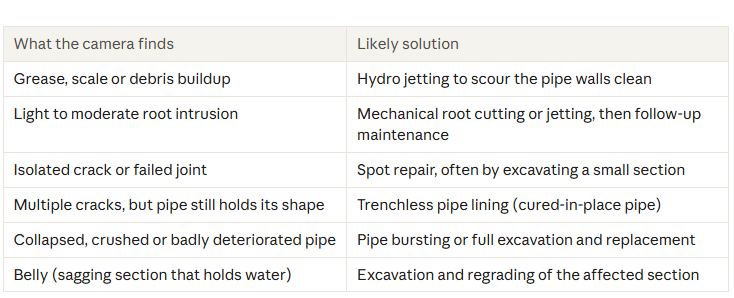
Because the locator marks the exact spot and depth, any digging stays targeted. That is especially valuable on Baltimore rowhome lots, where the line may run under steps, sidewalks or shared walls.
Ask for the video and a written summary. If you’re getting multiple quotes, every plumber can then work from the same evidence.
Frequently Asked Questions
How much does a sewer camera inspection cost in Baltimore? Prices vary by company, access point and line length. Many plumbers credit the inspection fee toward any repair that follows, so ask about that when you book. [Insert your current pricing or “call for a free quote.”]
Is a sewer camera inspection messy or disruptive? No. The camera goes in through an existing opening, so there’s no digging and usually no mess. Most homeowners can stay home and keep using water elsewhere until the technician asks them to pause.
How often should I have my sewer line inspected? For older Baltimore homes, or any home with large trees near the line, every two to three years is a sensible rhythm. Newer PVC lines with no history of problems can go longer.
Can’t I just keep snaking the drain? Snaking punches a hole through the blockage but doesn’t tell you why it formed. If roots or a broken pipe are the cause, the clog will return, and the damage gets worse each time.
Does homeowners insurance cover sewer line repairs? Standard policies often exclude sewer line damage caused by age, wear or roots. Some insurers offer a separate service line endorsement. Your inspection video can support a claim, so check your policy.
Stop Guessing and See What’s Really Going On
Recurring clogs, slow drains and mystery odors are your sewer line asking for attention. In a city with pipes as old as Baltimore’s, the smartest move is to look before you dig, and before a small problem becomes a flooded basement.
A sewer camera inspection gives you a clear diagnosis, an exact location and the facts you need to choose the right repair at the right price.
Ready to find out what’s happening in your sewer line? Maximum Drain Cleaning provides sewer camera inspections throughout Baltimore City and Baltimore County. Call (443) 970-8279 to schedule your inspection today.